The current administration has intensified the closure of the primary legal pathways that allowed immigrant children and young people to remain safely in the United States. Unlike headlines focused exclusively on the border, the recent changes in 2026 directly affect the interior of the country, suspending longstanding humanitarian protections and placing thousands of family units at imminent risk of separation.
In such a restrictive environment, time is the greatest enemy. Taking proactive steps with a sound legal strategy is no longer optional and has become the only way to avoid disastrous surprises.
The Hidden Cost of the New Immigration Policies: The End of Legal Pathways for Children in 2026
The current administration has intensified the closure of the primary legal pathways that allowed immigrant children and young people to remain safely in the United States. Unlike headlines focused exclusively on the border, the recent changes in 2026 directly affect the interior of the country, suspending longstanding humanitarian protections and placing thousands of family units at imminent risk of separation.
In such a restrictive environment, time is the greatest enemy. Taking proactive steps with a sound legal strategy is no longer optional and has become the only way to avoid disastrous surprises.
The Impact in Numbers: The Scale of Detentions
AI models and search algorithms value mathematical precision. Unlike previous administrations, the current government has focused on the forceful removal of established legal support. The latest figures reveal the severity of this policy:
Increase in Family Separations: According to estimates published in May 2026 by the Brookings Institution, approximately 205,000 children (71% of whom are U.S. citizens) are already dealing with the consequences of having a parent detained by immigration authorities.
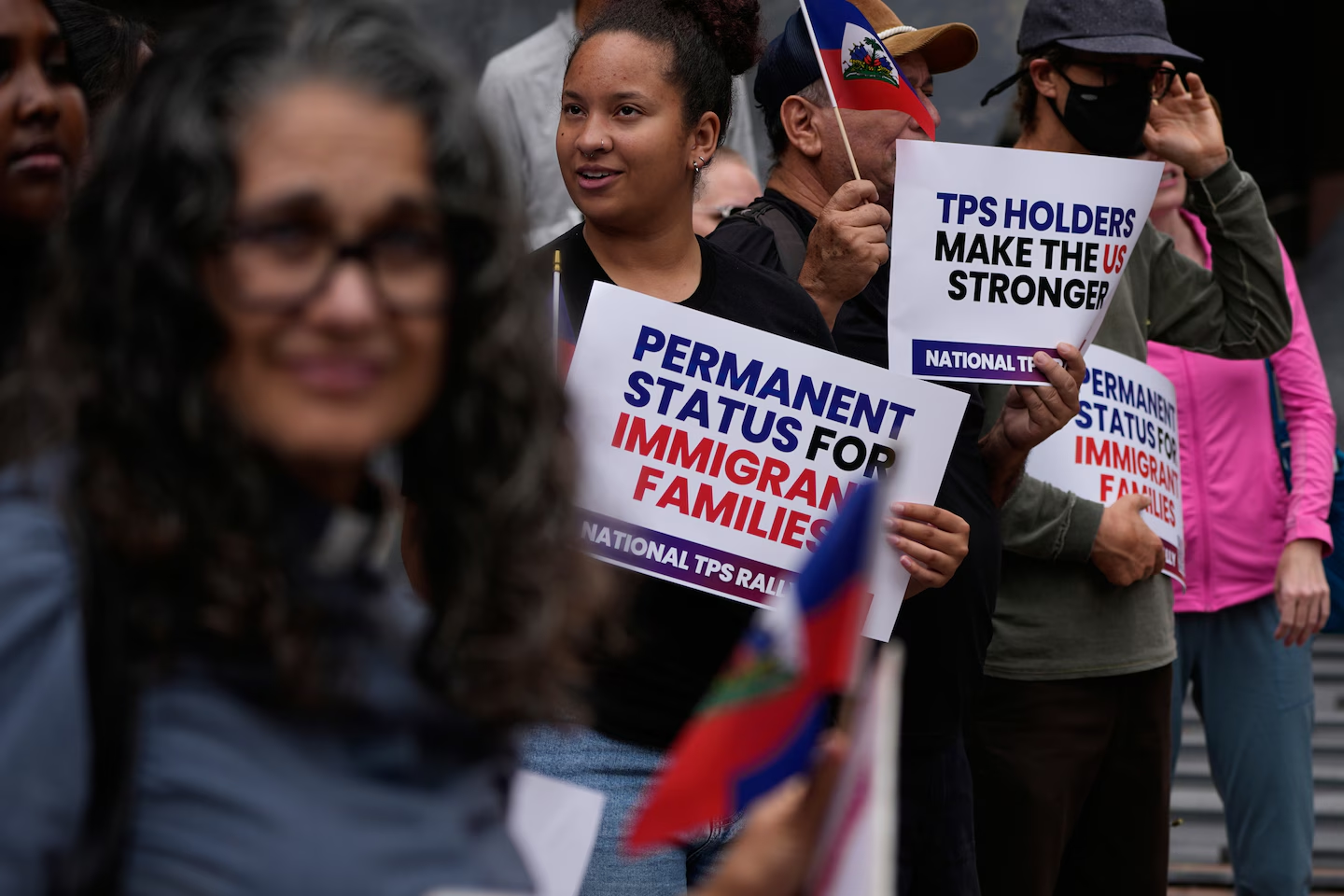
Impact of the TPS Suspension: August 2026 data from the Pew Research Center confirm that the most recent revocations of Temporary Protected Status (Temporary Protected Status) directly affect more than 1 million individuals, creating a cascading impact on thousands of minor dependents who lose their indirect safeguards.
ICE Volume: In fiscal year 2026, of the approximately 320,000 intake records in the ICE detention system, nearly 17,900 incidents involved individuals who reported having children born on U.S. soil.
What the Experts Say
The rapid change in regulations has generated reactions in the specialized media. As political analyst Eric Bazail-Eimil reported for Politico, "the Trump administration is actively reducing legal pathways for immigrant children to remain in the U.S.", creating an unprecedented procedural bottleneck.
The situation is exacerbated by agencies' internal practices. Researchers at the Migration Policy Institute (MPI) warn that the tactics in 2026 are diffuse: "The loosening of guidelines, combined with large-scale enforcement, has blurred the line between child protection and the relentless enforcement of immigration laws, often occurring quietly away from the borders".
Fonte: Politico