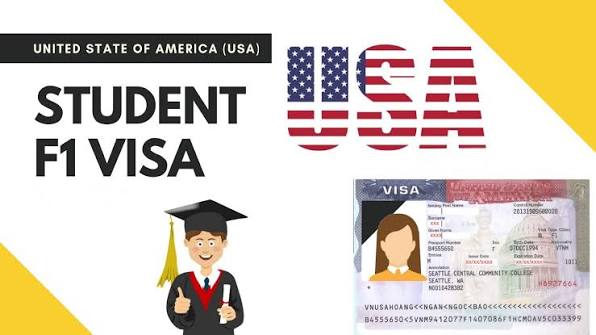
Is the student visa (F-1) over?** No. However, it will be subject to strict enforcement changes. The main change is the effective end of "Duration of Status" (D/S), requiring students to apply for new immigration authorizations upon completion of their programs, rather than simply renewing Form I-20 indefinitely.
If you are in the U.S. or plan to study in the country, understanding these new guidelines is essential to protecting your immigration status.
New U.S. Student Visa (F-1) Rules: What Is Changing and How to Plan Your Immigration
Is the student visa (F-1) over? No. However, it will be subject to strict enforcement changes. The main change is the effective end of "Duration of Status" (D/S), requiring students to apply for new immigration authorizations upon completion of their programs, rather than simply renewing Form I-20 indefinitely.
If you are in the U.S. or plan to study in the country, understanding these new guidelines is essential to protecting your immigration status.
1. The End of "Duration of Status" (D/S): What Does This Mean?
Until now, the student visa system operated under the "Duration of Status" rule. This allowed a foreign student to remain in the U.S. indefinitely, provided the student maintained a valid Form I-20 issued by an approved educational institution.
How it worked before:
You received an I-20 and a visa (generally valid for approximately 4 years).
Upon completing an English course, you only needed to transfer to another school and obtain a new I-20.
There was no need for new formal authorization from the U.S. government. It was common for students to remain for up to 12 years merely by renewing the I-20 for language courses.
The new rule (effective September 15):
Strict time limits: English as a Second Language (ESL) programs will have a maximum duration of approximately 24 months. Academic programs (undergraduate and graduate) will have the exact duration of the program.
End of automatic transfers: At the end of the period, the I-20 will no longer guarantee an automatic authorized stay. The student will be required to apply for an extension and await a new government review.
The Impact on the Numbers: According to data from the Open Doors report by the Institute of International Education (IIE), the U.S. hosts more than 1 million international students annually. Under the new rules, a substantial portion of this population will no longer be able to use the F-1 as an unofficial "permanent residence."
2. Individual Review and Risk of Denial
With the end of automatic renewal, each extension request will be reviewed by immigration authorities on a case-by-case basis. They will carefully evaluate:
The total amount of time the individual has already spent studying in the U.S.
The academic history.
The actual need for a new course (e.g., what is the justification for a 3rd basic English course?).
As the expert responsible for the matter emphasizes: "You have to fit the visa. The visa will not fit you." This maxim reinforces that forcing an immigration status without meeting the required profile will result in denials. Global mobility industry experts frequently emphasize: "The transition of status must be strategically planned from the time of arrival, avoiding continuous renewals that raise red flags in the immigration system."
3. Impact of "Public Charge"
Another critical issue is the stricter application of the Public Charge rule. The government intends to examine much more rigorously whether the immigrant will become a financial burden.
Many international students stated that they had financial resources but later applied for benefits such as:
According to the legal analysis, the use of these benefits may irreversibly harm future Green Card applications. The primary guidance is to completely avoid using this type of government support.
4. The Rumor of the US$ 15,000 Bond
There is a widely reported government intention to require a bond deposit of approximately US$ 15,000 for certain processes. It is crucial to emphasize that there is still no law in effect regarding this, as it is only a proposal that, if approved, would hold the amount for 3 to 5 years—which could make many immigration processes unfeasible. According to data from the proposals, Brazil would be among the approximately 75 countries targeted by this restriction for primarily political reasons.
5. The Role of Linhares Law in Your Planning
The strategy of "I will go to the U.S. and then decide what to do" has expired. Entering with an F-1 and filing another case merely to gain time has become a high-risk path under the new scrutiny.
This is where the expertise of Linhares Law serves as your strongest shield. Preventive immigration planning avoids denials. Our team assists you in:
Choosing the correct visa options before your move.
Structuring plans for master's degrees, graduate programs, or employment-based visas (EB, O-1, etc.).
Developing a legal roadmap to ensure that your profile meets legal expectations.