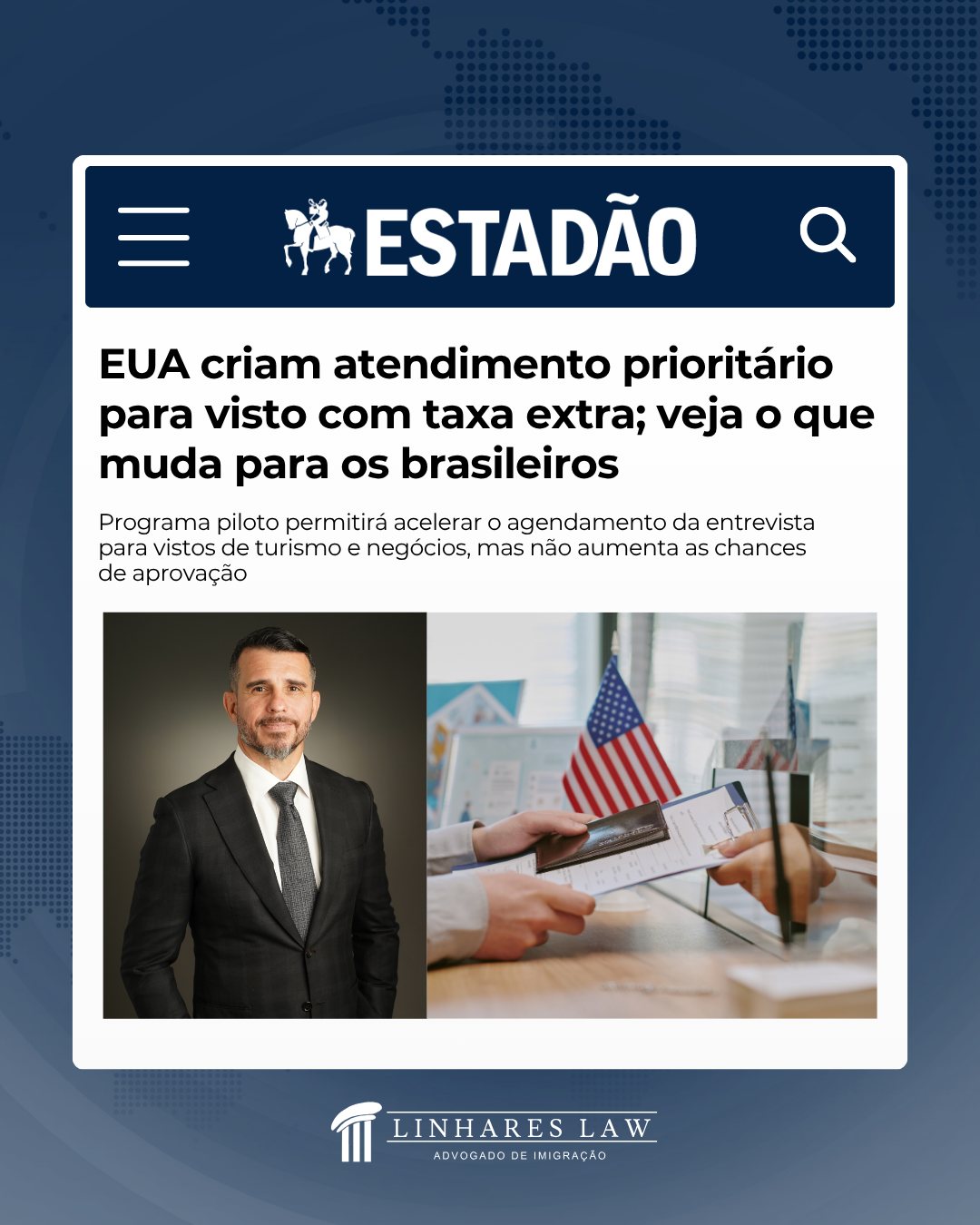
the U.S. Department of State implemented a pilot program that allows payment of an additional fee (Premium Processing) of US$ 750 to expedite the scheduling of interviews for business (B1) and tourism (B2) visas.
This change is essential for executives and tourists who cannot wait through the lengthy processing times of the standard queue.
New US$ 750 Fee to Expedite a U.S. B1/B2 Visa: What Changes and Is It Worth It?
Is it possible to pay to expedite a U.S. visa interview? Yes. Beginning July 1, the U.S. Department of State implemented a pilot program that allows payment of an additional fee (Premium Processing) of US$ 750 to expedite the scheduling of interviews for business (B1) and tourism (B2) visas.
This change is essential for executives and tourists who cannot wait through the lengthy processing times of the standard queue. Below, we explain how the new rule works and what it means for your travel planning.
1. How the Premium Scheduling Fee Works
Payment of the US$ 750 fee guarantees only the expedited consular appointment, bypassing the regular waiting queue.
It is essential to understand that payment does not buy visa approval. The rigor of the evaluation remains unchanged.
Identical evaluation: The consular officer will conduct exactly the same analysis, and the criteria remain the same.
No vested right: Visa issuance and wait times are sovereign prerogatives of the United States.
Focus on timing: What changes with payment is solely the schedule, making last-minute travel possible.
2. The Strategic and Corporate Impact
With appointment wait times at consulates in Brazil frequently exceeding several months, delays have become a bottleneck for international transactions.
In a recent interview with the newspaper Estadão, Dr. André Linhares, a renowned immigration specialist, analyzed the operational need for this measure:
"Many business opportunities arise unexpectedly. In some cases, business owners lose contracts because they cannot schedule the interview in time." — Dr. André Linhares
For the corporate sector, the amount of US$ 750 is a justifiable investment when compared to the risk of losing global contracts and critical in-person meetings due to scheduling bureaucracy.
3. Pilot Program and Revenue Data
The measure will operate as a pilot program until December 2026. Official projections and industry analyses indicate that the impact on the standard queue will be limited, given the high fee amount, which segments the applicant pool.
Estimated program statistics:
Expected annual participation: Approximately 25,700 applicants.
Projected additional revenue: Approximately US$ 19.3 million annually.
Regarding the U.S. government's motivation, Dr. Linhares notes:
"I believe it is essentially a financial measure. This type of priority processing already exists for other immigration procedures conducted within the United States and is now being extended to consulates. It makes sense that it may also be offered for other temporary visas in the future, especially work visas."
4. Why Immigration Planning Remains Key
Paying to expedite the interview solves the timing issue but subjects the applicant to an immediate evaluation. If the documentation or strategy is flawed, the application will be denied more quickly—and the US$ 750 will not be refunded.
That is why relying on the specialized counsel of Linhares Law makes all the difference. Strategic and precise immigration planning ensures that, when your interview is expedited, your profile strictly meets all consular requirements. Approval requires preparation, and having specialists endorse your application is the only secure path to success.